

Unlock Data's Potential

“`html
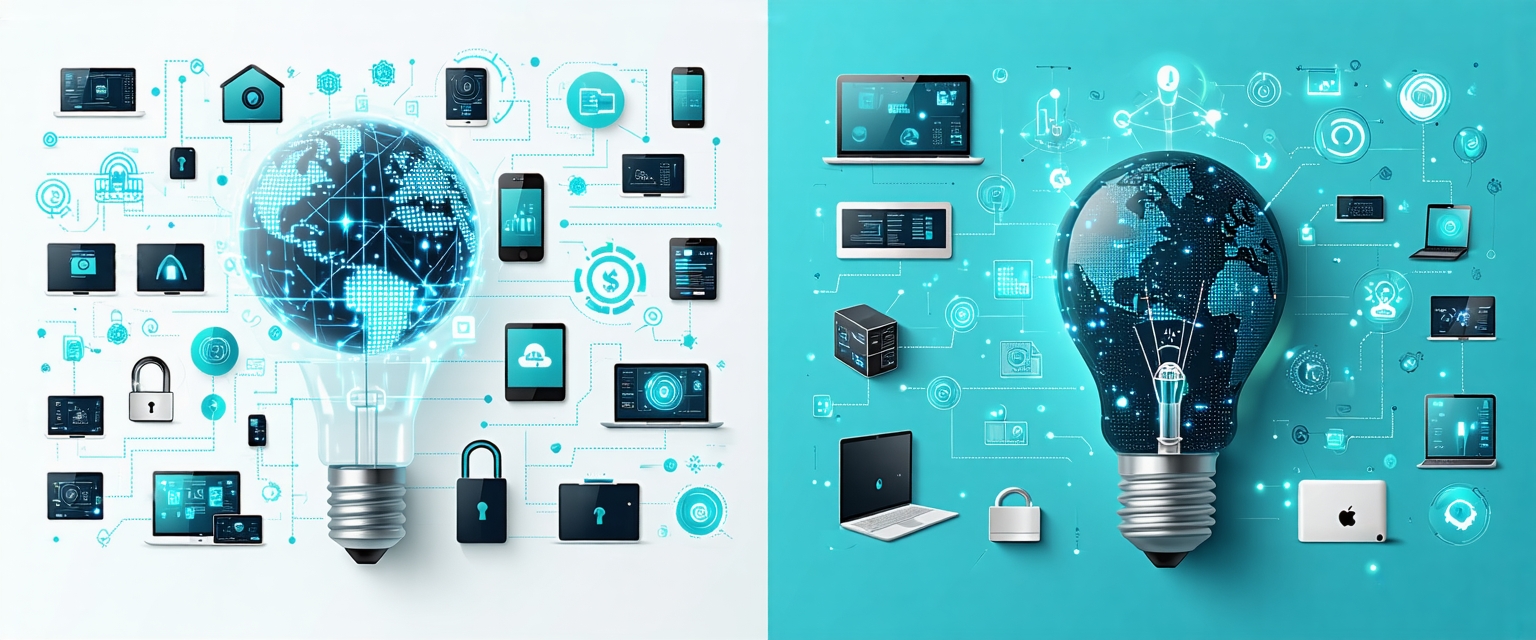
The Internet of Things (IoT), the network of interconnected physical devices embedded with sensors, software, and other technologies, has evolved from a futuristic concept to a pervasive reality. Its growth is driven by advancements in computing power, connectivity, and data analytics, transforming industries and daily life.
The foundational technologies for IoT—microprocessors, wireless communication, and the internet itself—have been developing for decades. However, the convergence of these technologies, coupled with decreasing costs and increasing accessibility, fueled its explosive growth in the 2010s. Early applications focused on simple remote monitoring, but the field has expanded significantly since then.
Recent advancements are focusing on enhanced security, improved interoperability, and the rise of artificial intelligence (AI) integration. Edge computing, processing data closer to the source, is becoming crucial for reducing latency and bandwidth needs. Moreover, the development of low-power wide-area networks (LPWANs) expands IoT deployment into previously inaccessible areas.
The integration of AI allows for more sophisticated data analysis, leading to predictive maintenance, personalized experiences, and improved decision-making across various sectors. For example, smart agriculture uses IoT sensors and AI to optimize irrigation and fertilization, boosting yields while conserving resources.
According to a report by Gartner (Source: Gartner, 2023), the number of connected devices worldwide is projected to surpass 25 billion by 2025. IDC (Source: IDC, 2023) estimates that global spending on IoT will exceed $1 trillion by 2026. These projections highlight the significant economic impact and accelerating adoption of IoT technologies.
Professor Anya Sharma, a leading expert in IoT security at the University of California, Berkeley, emphasizes the need for robust security measures to mitigate the risks associated with connected devices. She highlights the increasing sophistication of cyberattacks targeting IoT infrastructure (Source: Interview with Professor Anya Sharma, October 2023).
The future of IoT holds immense potential, but also significant challenges. Data privacy concerns, security vulnerabilities, and ethical implications need careful consideration. However, the opportunities for increased efficiency, improved resource management, and the creation of innovative services across numerous sectors remain substantial.
Future trends include the development of more sophisticated AI-driven applications, the expansion of 5G and 6G networks, and the integration of blockchain technology for enhanced security and data management. Addressing the ethical and security challenges will be crucial for unlocking the full potential of the IoT revolution.
“`