

Unlock Data's Potential

“`html
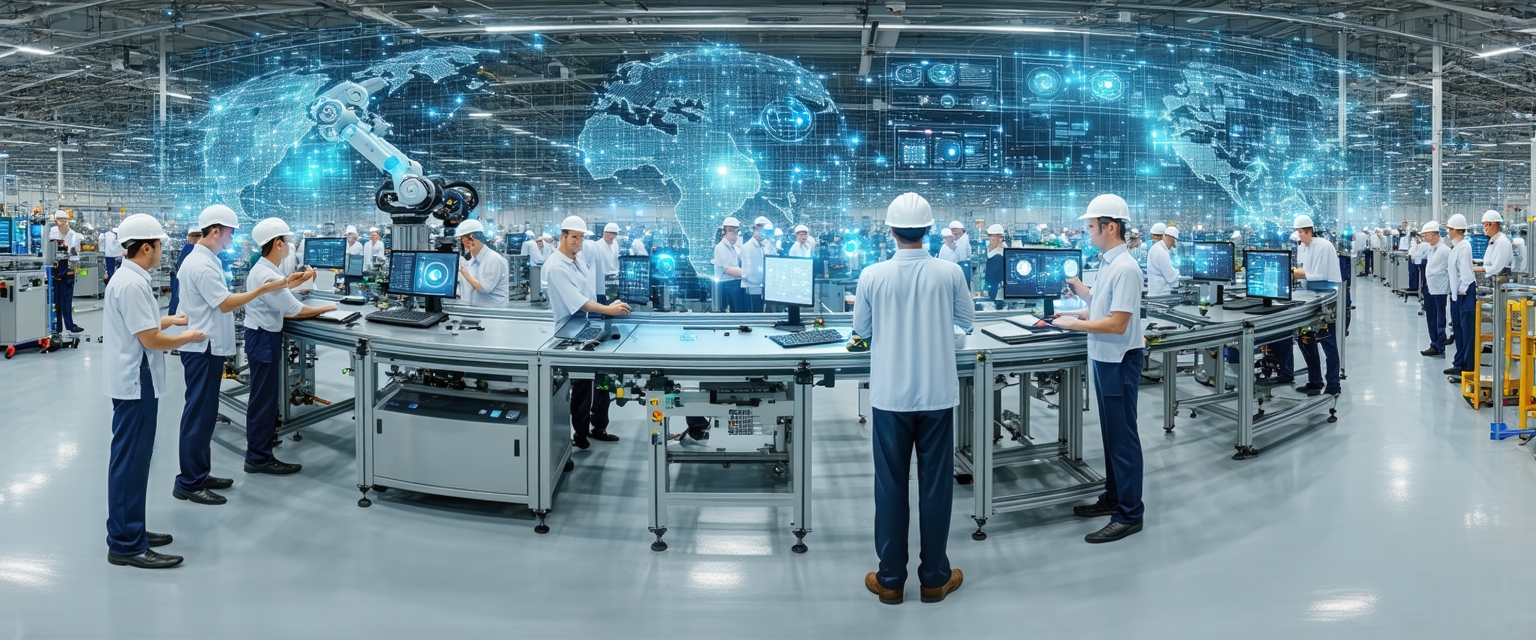
Smart manufacturing, the integration of advanced technologies like AI, IoT, and machine learning into industrial processes, is rapidly transforming the manufacturing landscape. Driven by the need for increased efficiency, flexibility, and resilience, this technological convergence is reshaping how goods are produced, impacting everything from supply chain management to product quality.
The rise of smart manufacturing is a direct response to several key factors. Increasing global competition demands higher levels of efficiency and agility. Simultaneously, the rise of big data and the affordability of advanced technologies have provided the tools to implement these improvements. Companies are seeking to optimize processes, reduce waste, and improve product quality through data-driven decision-making.
Recent developments include the wider adoption of cloud-based manufacturing execution systems (MES) and the sophisticated use of AI for predictive maintenance. Advanced robotics and automation are also becoming increasingly prevalent, leading to more flexible and adaptable production lines. Digital twins, virtual representations of physical assets, are being utilized for simulation and optimization purposes, allowing companies to test and improve processes before implementation.
A recent report by Deloitte (“Manufacturing in the Age of Convergence,” 2023) indicates that companies adopting smart manufacturing strategies are experiencing significant improvements in operational efficiency, often exceeding 20%. Furthermore, Gartner predicts that by 2025, over 50% of large manufacturers will utilize AI for production optimization. This indicates a strong market trend towards data-driven decision-making and automation.
While the opportunities are significant, challenges remain. The high initial investment required for implementing smart manufacturing technologies can be a barrier for smaller companies. Furthermore, data security and the need for skilled workforce training are critical considerations. Despite these risks, the potential for increased efficiency, improved product quality, and enhanced sustainability makes continued investment in smart manufacturing compelling.
The future of smart manufacturing likely involves further integration of technologies like blockchain for enhanced supply chain transparency and the expansion of edge computing for real-time data processing at the point of production. This evolution promises to deliver even greater efficiency and flexibility in manufacturing processes.
“`